The Central Valley of California runs 450 miles north to south across the entire middle of the state. It’s an exceptionally rich and fertile region; farmers here are responsible for more than a third of the United States’ vegetables and nearly three-quarters of our fruits and nuts. If you take a road trip from San Francisco to Los Angeles, you’ll drive right through it and glimpse its bounty: fields of onions waiting to be harvested, rows of green heads of cabbage and lettuce, so many nut trees.
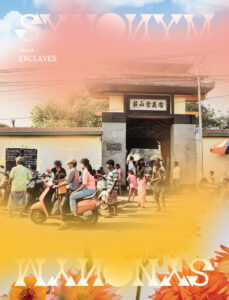
About two hours after leaving San Francisco, you’d come across my hometown, Stockton. It’s an incredibly diverse city and is home to the fifth-largest Cambodian population in America. The community began to grow significantly after 1975, when the United States authorized the admission and resettlement of tens of thousands of refugees displaced by the wars in Southeast Asia and the Khmer Rouge’s rule in Cambodia. Between 1975 and 1994, the United States accepted 150,000 Cambodian refugees. The refugees were then dispersed throughout the country, in part because of logistics and resources and in part because the government believed separation would force assimilation. But that didn’t quite work: Khmers found one another and began forming enclaves. In addition to Stockton, the community settled in large numbers in Long Beach in Southern California; Lowell in Massachusetts; and Seattle in Washington.
We were one of the 150,000 refugees accepted into the United States during that time. I was two years old when we were sponsored out of the refugee camp in Thailand where I was born and where my parents fled to after escaping the Khmer Rouge’s charom1. We landed in Dallas in 1984. My parents, though, were already thinking of moving to a place called Stockton. They heard there was already a growing community of Khmers there—but that wasn’t the only reason they were interested in Stockton.
They also heard that Stockton had a lot of fertile land.
A lot of bright sun. Some humidity. My parents wanted to move to Stockton, in other words, because the climate was perfect for a garden.
Between 1980 and 1990, around 10,000 Cambodians settled in Stockton. When we moved there in 1984, we were surrounded by Khmer and other Southeast Asian families. We moved a few times within Stockton, but always to neighborhoods with other Khmers, eventually settling down in a faded gray duplex at the end of a cul-de-sac. My parents even reconnected with some folks they’d met in the camp. And they got their garden: No matter where we lived, my mom always managed to find room to grow a few things, like lemongrass, pumpkins, watermelons, cucumbers, chile peppers, and holy basil.
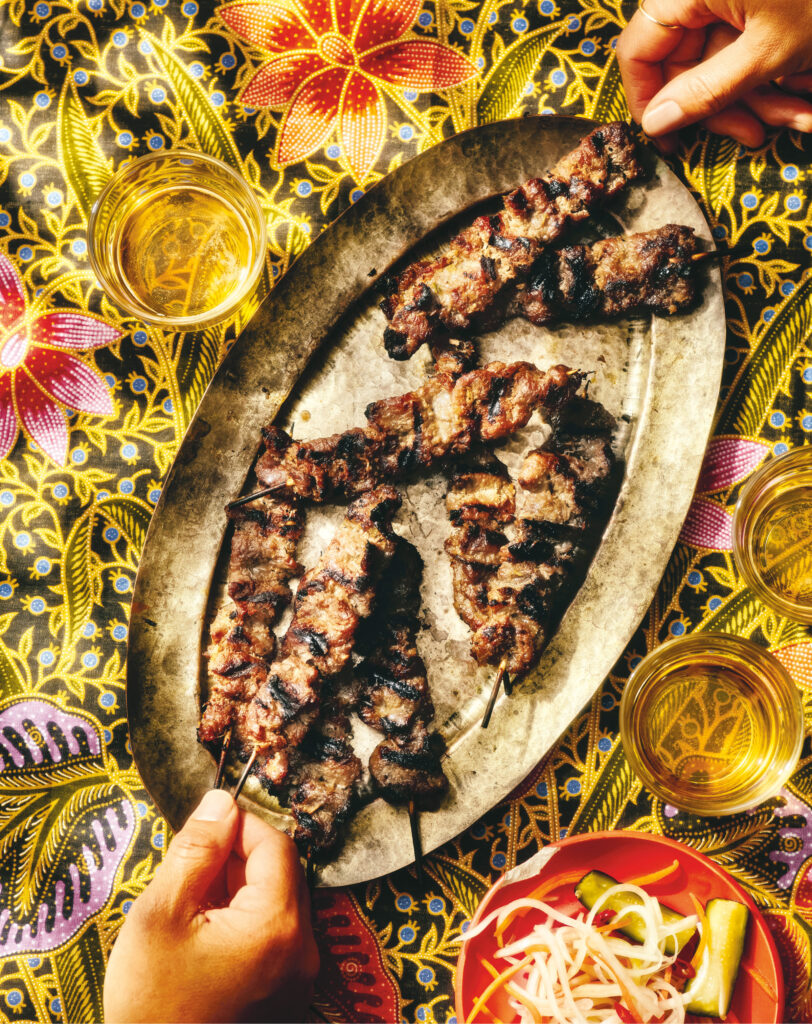
The community was established enough that grocers, like our family shop Arun Market, stocked ingredients for Cambodian cooking. That, combined with a lack of economic opportunities, led to the creation of an informal food economy in the city. There was, for instance, an incredible food scene at Angel Cruz Park. It started with maybe three Khmer families who set up at the park and cooked up delicious snacks. It grew to include Laotian families, Hmong families, Vietnamese families, all serving some of the best street food you’ve ever had. Someone sold beef jerky; someone else grilled up sausages. You could never leave without picking up a few sach ko ang2. To this day, there are vendors at the park, some of whom have been there for decades, others who are just getting started.
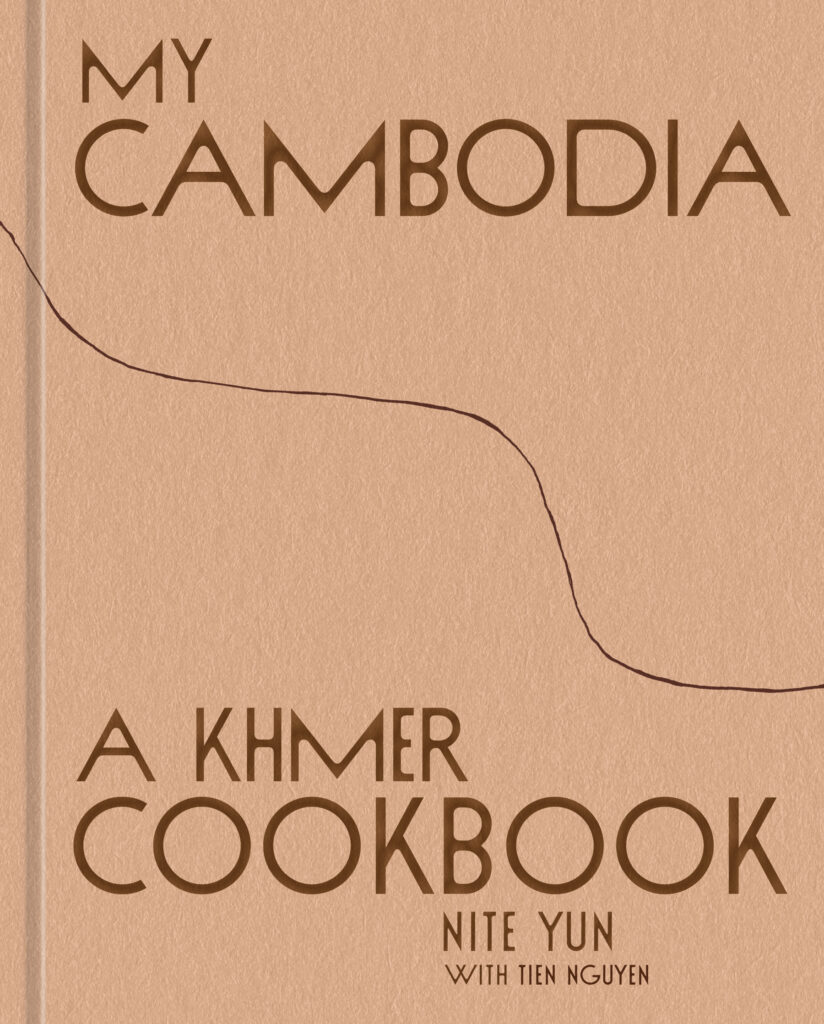
Reprinted with permission from My Cambodia: A Khmer Cookbook by Nite Yun with Tien Nguyen. Published by 4 Color Books, an imprint of Penguin Random House.
1 forced labor camps
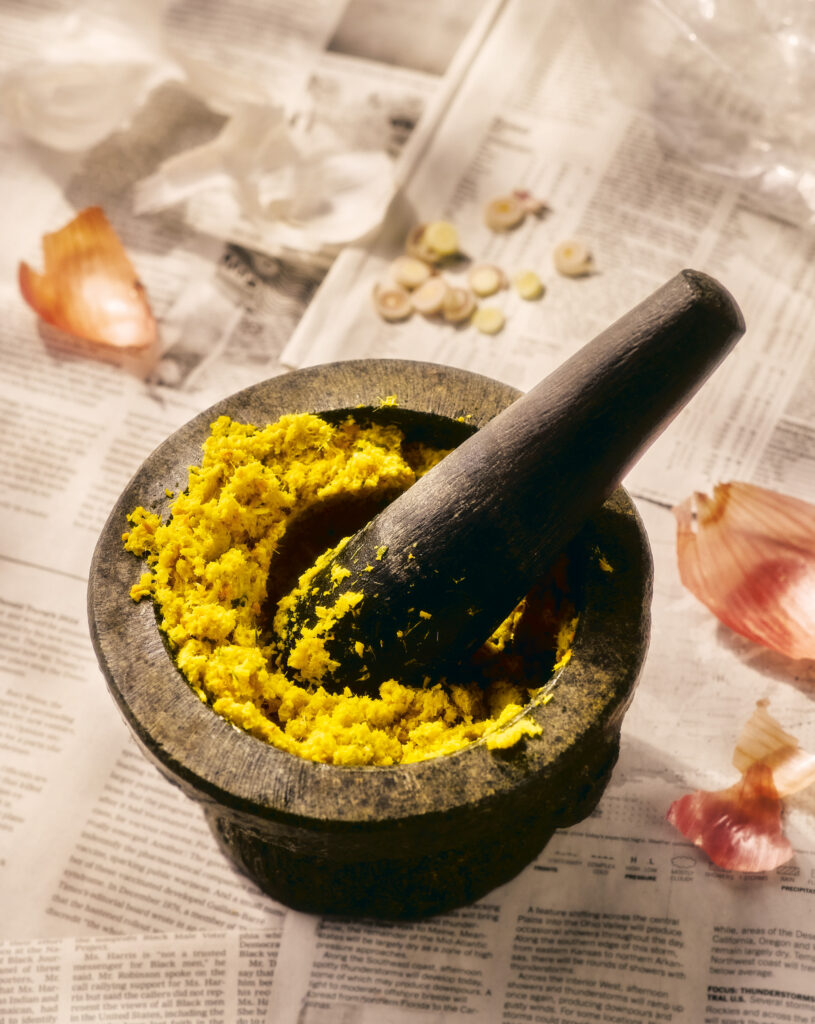
2 beef skewers marinated in kroeung
Up Next
Crossing Borders
