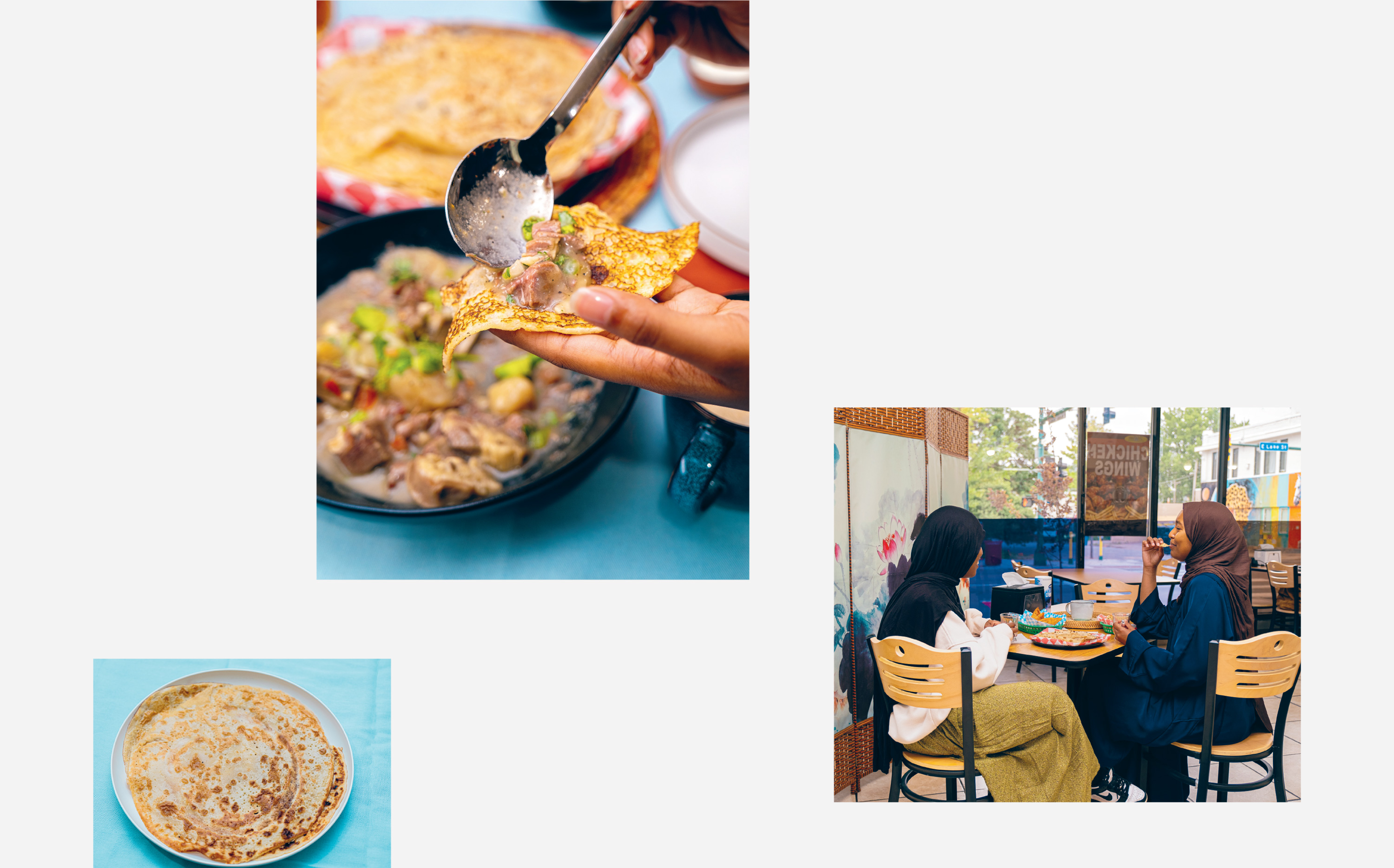
I ripped apart the malawax, a soft, crepe-style pancake, and dipped it into the hearty chicken suqaar, a thinly sliced, spiced meat dish prepared with vegetables, and revelled in its deliciousness. Accompanied by sweet Somali shaah—black tea with milk, cardamom, cloves, and ginger—the combination satiated my stomach and heart simultaneously. I first visited Minneapolis restaurant Hufan from my home on the East Coast, as part of my unofficial Somali cultural tour through the Twin Cities, home to one of the largest Somali diaspora populations in the United States, and left not just impressed but also hooked, already craving my next taste of its unforgettable flavors.
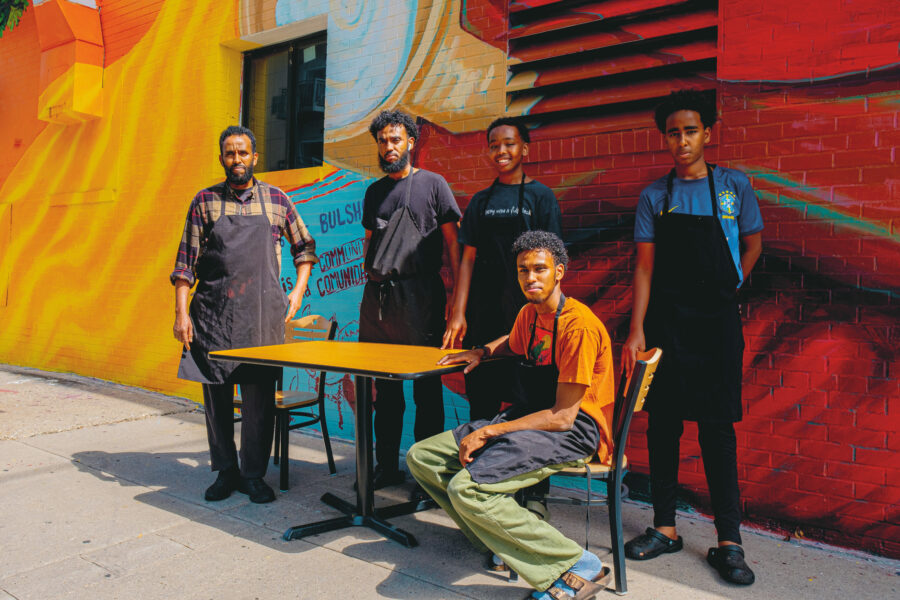
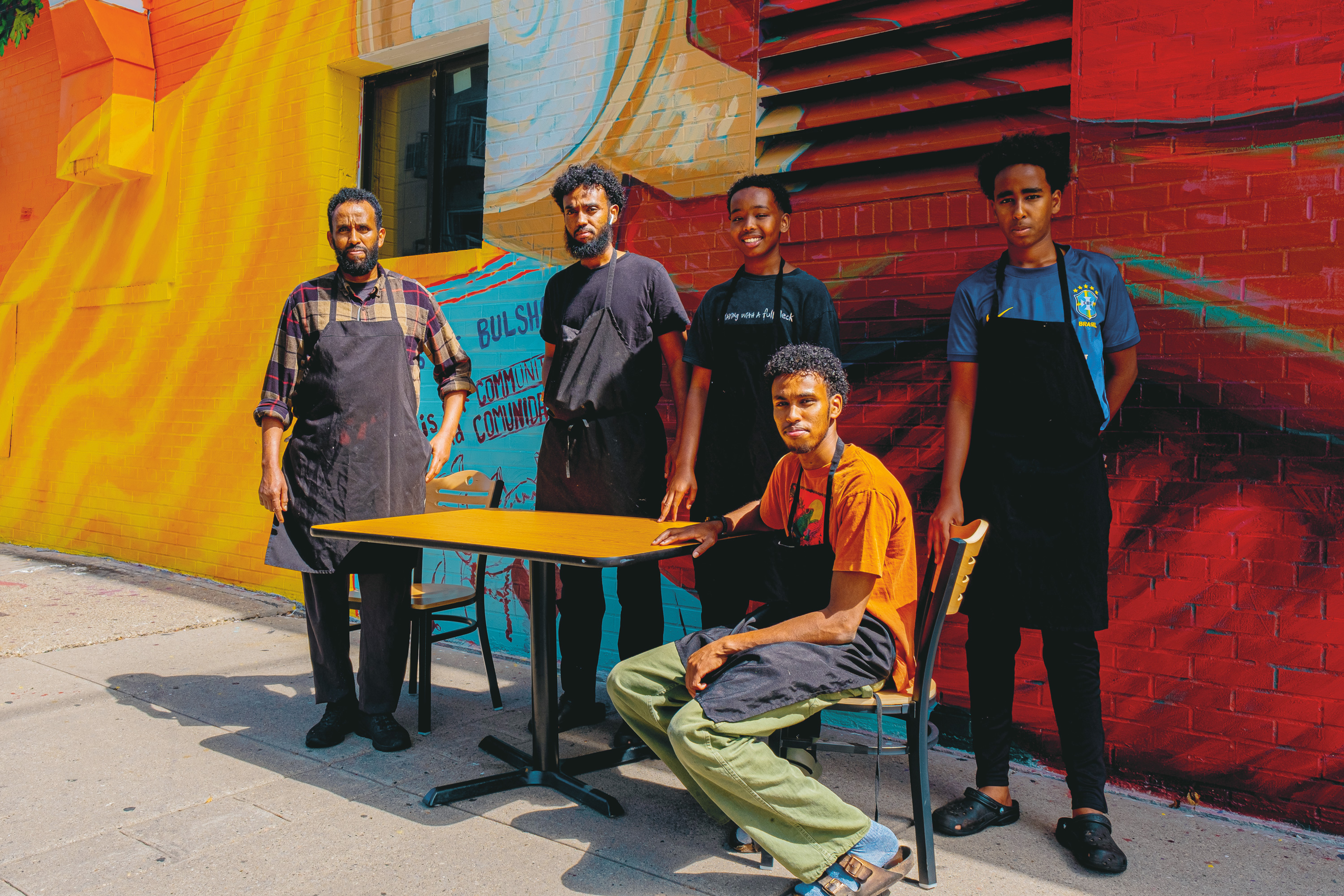
Hufan Restaurant and Cafe is in the heart of South Minneapolis’s vibrant and diverse Lake Street district. Above the storefront is a mural that pays tribute to the many immigrant communities that call the neighborhood home. Among its figures are a Somali auntie and uncle—cultural signposts and reminders that places like Hufan are more than restaurants; they are part of the fabric that sustains Lake Street’s identity. And just like visiting Auntie’s house, I know I’ll be fed with heart and soul.
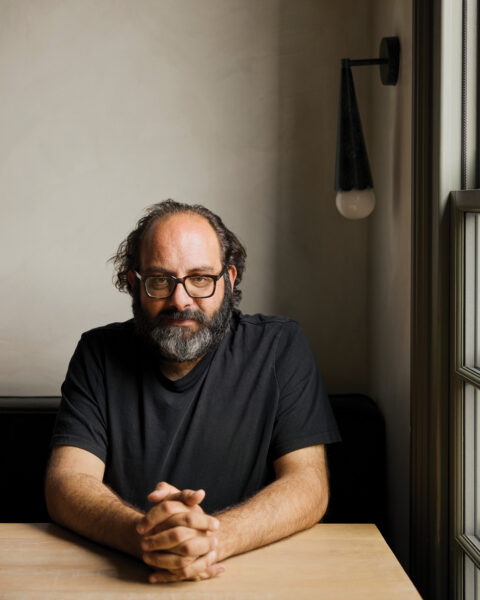
Hufan’s physical presentation is very humble, but what it lacks in aesthetics, it makes up for with substance. I, like many other Somalis in Minnesota, have found belonging in this quaint spot. It’s more than just familiar food; it’s a sense of welcome. Many of the local Somali restaurants are gathering spaces, where traditional social and cultural Somali norms take over the dynamics. Hufan is a space where any customer can feel comfortable. “Most young Somalis in the area frequent our restaurant,” says Abdiwahab Abdi Mohamed, who, along with his wife, Fardowsa, owns Hufan. The youth presence is a telling sign that the establishment and its menu reflect the times. After all, Hufan, and the family behind it, is nothing if not adaptable.
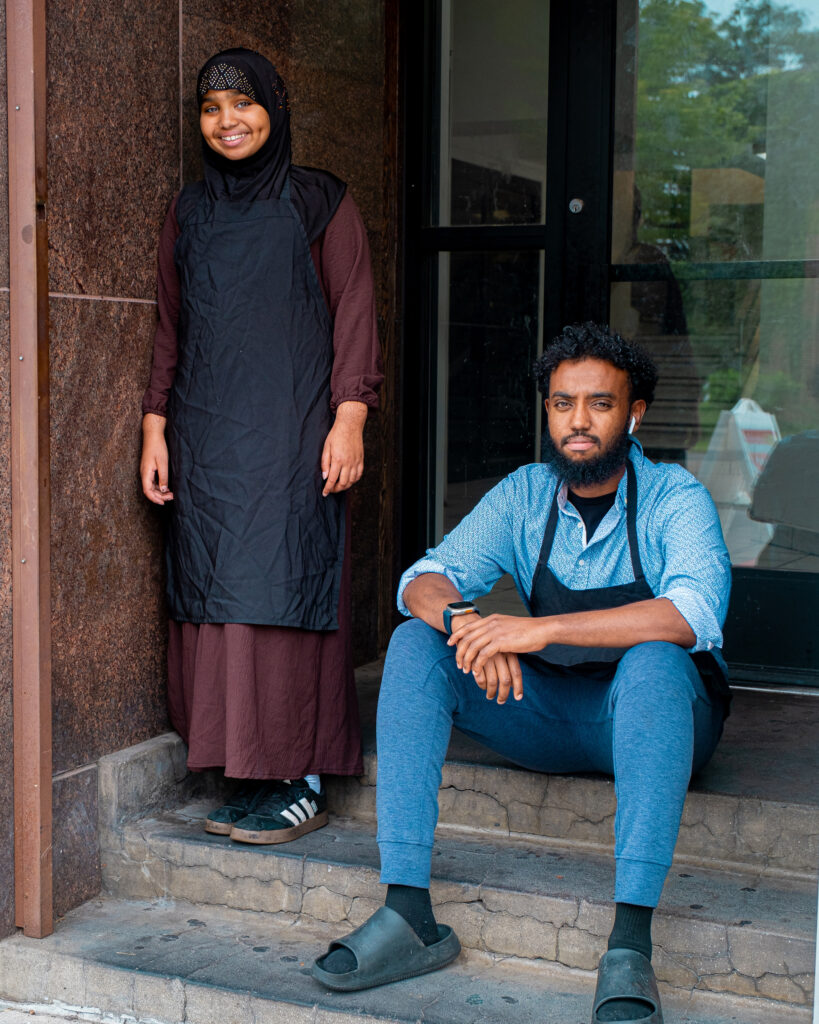
Diners are usually greeted by Abdiwahab and Fardowsa’s sons. Although they were born in America, the sons carry on the legacy of their paternal grandfather, Abdi Buur Mohamed Ahmed, who opened the original Hufan in Somalia. A poster features a picture of Abdi Buur and a map marked with Hufan’s travels across East Africa and to the U.S.—a reminder that speaks to family and tenacity.
“Hufan was my paternal grandmother’s name. It means ‘cleanliness,’” says Abdiwahab. “As a young man, my father left the nomadic life he was raised in to work at a restaurant in the nearest city, Galkayo. Years later, in 1961, he opened the first iteration of Hufan there, in the north-central Mudug region of Somalia.”
When Abdi Buur received a lucrative opportunity to cook for laborers building the road from Burco in the Togdheer region to the seaside city of Berbera in the Sahil region, he reopened Hufan in Sheikh, Sahil. This experience made him realize the importance of preparing meals for laborers, with foods that would sustain them. As political tensions rose in the north, the family left Sheikh in the mid-1980s and opened the third Hufan in Mogadishu. When the Somali government collapsed in January 1991, the family went to Utange Refugee Camp in Kenya. “We opened another branch of Hufan and it was very popular,” Abdiwahab says. The camp closed in the mid-1990s, and though many refugees were moved to larger camps—Dadaab and Kakuma, which are still open today—Abdi Buur moved his family to Nairobi, where they opened the restaurant’s fifth iteration.
In 2000, Abdi Buur and his family were resettled in the United States, in Minneapolis, where they once again opened a Hufan. The restaurant moved to its current location in early 2020, just before the COVID-19 pandemic and the murder of George Floyd by a Minneapolis police officer. Lake Street bore the brunt of the protests that followed, and like most of the establishments in this area, Hufan sustained thousands of dollars of damage. Local nonprofits have helped Hufan and other businesses in the area rebuild, thankfully, or I may have never discovered it.
This is where I found a home away from home. And I’m not the only one.
I first experienced Hufan a couple of years ago, when I spent a summer in Minneapolis, reconnecting with family and friends in the area. I have been going back ever since. Amidst the growing pains of adjusting to a new place, however temporary, Hufan became my anchor. Every weekend, I’d start my day there, each time bringing a different friend. It was a grounding experience, reminiscent of how Somalis would come together back home: eating with your hands, sharing a meal, and having the quintessential Somali “shaah iyo sheeko,” or teatime conversations with friends. I was an American-born kid who loved cereal and Pop-Tarts, but gathering at Hufan with my friends as their kids eat goat meat or laxoox with tea, like my aunties would prepare, reminds me that culture will always be passed on as long as it’s available.
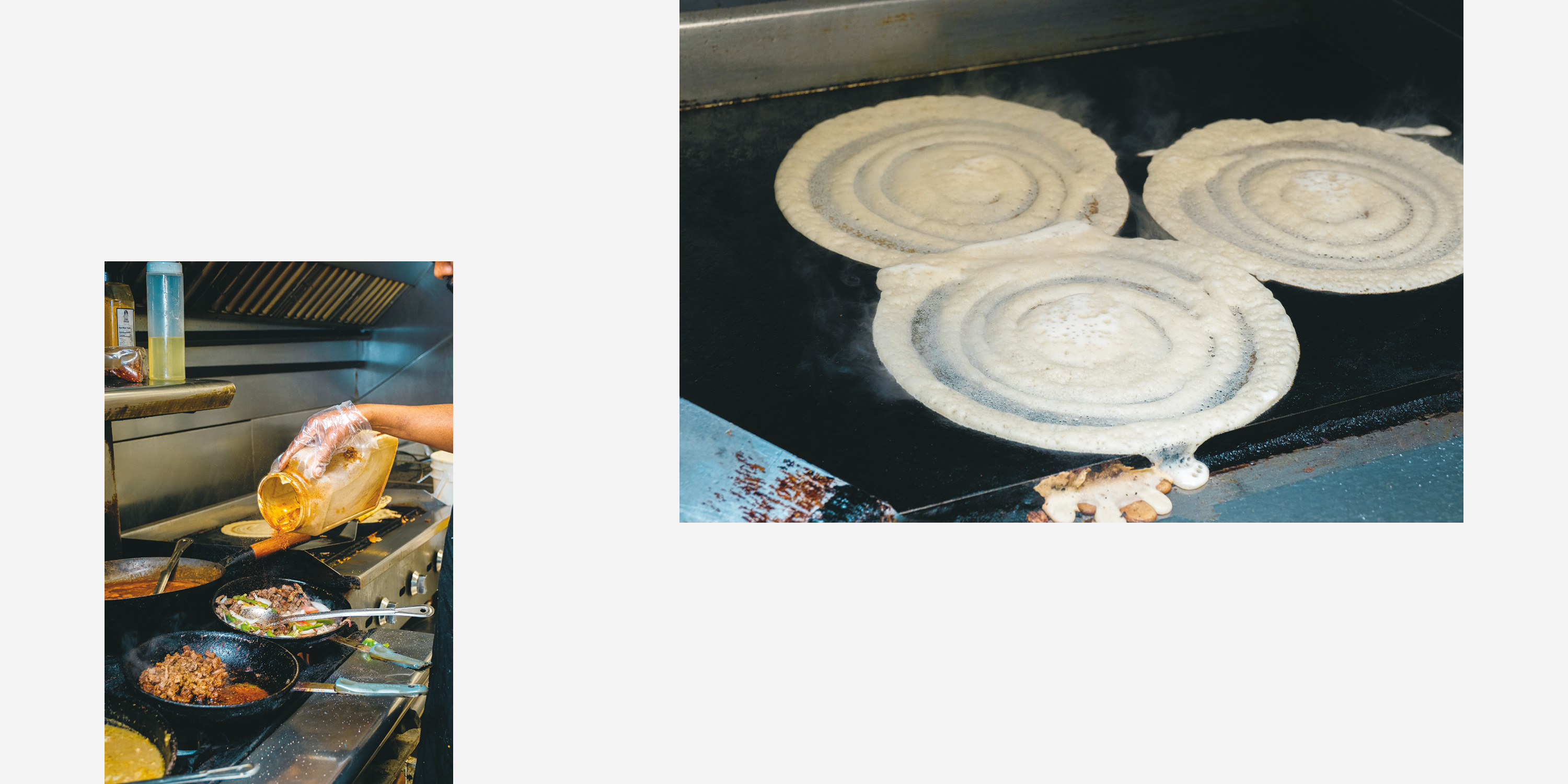
For me, Hufan’s breakfast is the biggest draw. Building off their experience serving laborers in Sheikh, the owners serve breakfast all day “to accommodate the variety of work schedules people manage in the United States,” Abdiwahab says. Diners can choose from organ meats like goat liver and kidney, or beef and chicken suqaar, and delicious fuul or a veggie omelette with malawax, chapatti, bread, or muufo. Somali shaah completes the meal.
The rest of Hufan’s menu is marked by the changes it’s withstood, reflecting the family’s experience and ability to adapt. “We carry everywhere that we’ve been with us,” Abdiwahab says. “We offer rice and haniid prepared the way Somalis in the north are used to. We offer isbeso, a thick broth made with potatoes, vegetables, and meat, made the same way we used to make it in Galkayo. From our time in Mogadishu, we offer pasta and busketti—thinly sliced steak, a regional speciality. We offer mandazai and ugali from our time in Kenya. For the young kids, or those more akin to American tastebuds, we have chicken nuggets, chicken wraps, and Philly cheesesteak. There’s something for everybody!”
Many Somali restaurants close just a few years after opening or undergo staff changes that affect food quality and service, but Hufan has remained a steady constant. In a community and space marked by frequent change and fluctuation, it’s a reliable and nourishing presence. Abdiwahab says Hufan is appreciated by many non-Somalis too, who are just as devoted: “One of our regulars shared that for his last meal, he would like to have beer [goat liver] and laxoox!” This is where I found a home away from home. And I’m not the only one.
Up Next
The Power of Preservation