There’s a shawarma stand in Beirut, tucked into a side street where the traffic hums and the neon flickers. The men behind the counter move fast, shaving thin ribbons of meat, tucking them into bread, scattering pickles and tahini like an afterthought. You order, you eat, you keep moving. But long after you leave, the taste lingers—smoky, spiced, exactly as it should be.
I grew up eating at this stand. To me, it was true, authentic shawarma. Years later, in a kitchen in Cleveland, I try to re-create it. The garlic is right. The spices are close. But something is missing—something I can’t bottle. Maybe it’s the air, thick with the scent of roasting meat and car exhaust. Maybe it’s the way the sandwich is wrapped: rolled just tight enough, the bread kissed by the heat of the grill. Maybe it’s simply impossible to re-create a memory, no matter how precise the ingredients. Or maybe what I’m really after—authenticity—is something that just evades capture.
The Origins of Shawarma
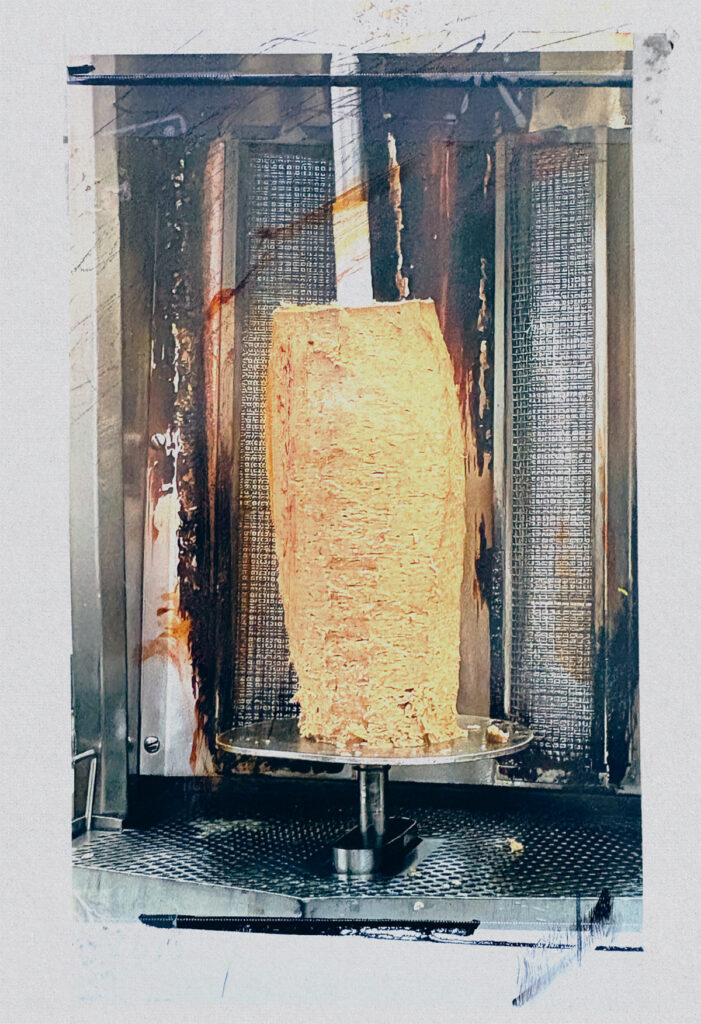
Shawarma is often discussed as a Middle Eastern dish, yet its origins are rooted in the culinary traditions of the Ottoman Empire. Early forms of vertical rotisserie cooking—sometimes referred to by the Turkish term çevirme (“to turn”)—laid the groundwork for what we now know as shawarma. Over time, the technique evolved into what many today recognize as döner kebabs in Turkey, gyros in Greece, and shawarma in the Levant. Although these names and presentations differ, they all share a common heritage of marinated meat slowly roasted on a vertical spit.
Ottoman cooks layered marinated lamb or beef onto a skewer, roasting it slowly so that the outer layers crisped while the inside remained tender. Served in various forms—wrapped in thin flatbread, atop rice, or alongside pickled vegetables—the dish absorbed local influences as it spread throughout Ottoman territories, from Turkey to Syria, Lebanon, and Palestine.
The Ottoman Spice Trade and the Flavor of Shawarma
Shawarma’s distinctive flavor comes not just from the method of cooking but also from its intricate spice blend—a direct inheritance from the vast Ottoman spice trade. From the 15th to the early 20th century, the empire controlled the most critical trade routes connecting Asia, Europe, and Africa: the Silk Road and the maritime passages through the Red Sea and the eastern Mediterranean. Acting as the gatekeepers of the spice world, the Ottomans imported cinnamon and cloves from Sri Lanka, peppercorns from India, and saffron from Persia, weaving these flavors into the fabric of their cuisine.
Spices during the Ottoman era were more than mere ingredients: They were symbols of power and wealth, often exchanged as diplomatic gifts or used in royal negotiations. In the grand bazaars of Istanbul, merchants displayed saffron, nutmeg, and cardamom, each as valuable as gold. But beyond their status, these spices were tools of transformation. As they passed through the hands of traders and cooks, they blended into local dishes, evolving into new expressions of flavor. Shawarma, with its warm mix of cinnamon, allspice, and cloves, embodies this synthesis—a dish born from trade, migration, and adaptation.
In Lebanon, the shawarma I grew up with carried notes of cinnamon and allspice, a flavor profile that mirrors the legacy of those ancient routes. Yet even within this region, recipes vary widely, reflecting localized adaptations of a shared history. While in some Syrian kitchens a richer touch of red chili and cumin prevails, Lebanese versions might introduce a subtle whisper of cardamom. Each variation is a testament to the myriad ways cultures adapted the spices that once traveled these historic routes, creating a dish that is both universally connected and deeply personal. In many ways, the layered complexity of shawarma mirrors the complexity of the Middle East itself—a region of countless narratives, traditions, and flavors interwoven over centuries.
Shawarma, Al Pastor, and the Migration of Flavor
The story of shawarma in North America, too, reflects how food migrates, adapts, and takes root in new soil. Lebanese immigrants brought shawarma to Mexico in the early 20th century, where it evolved into a new culinary icon: trompo al pastor. Here, the protein, often pork, is marinated in achiote and pineapple juice and served with tortillas instead of pita.
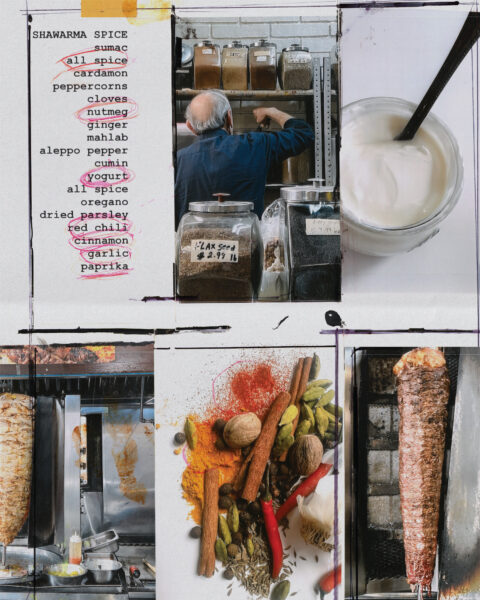
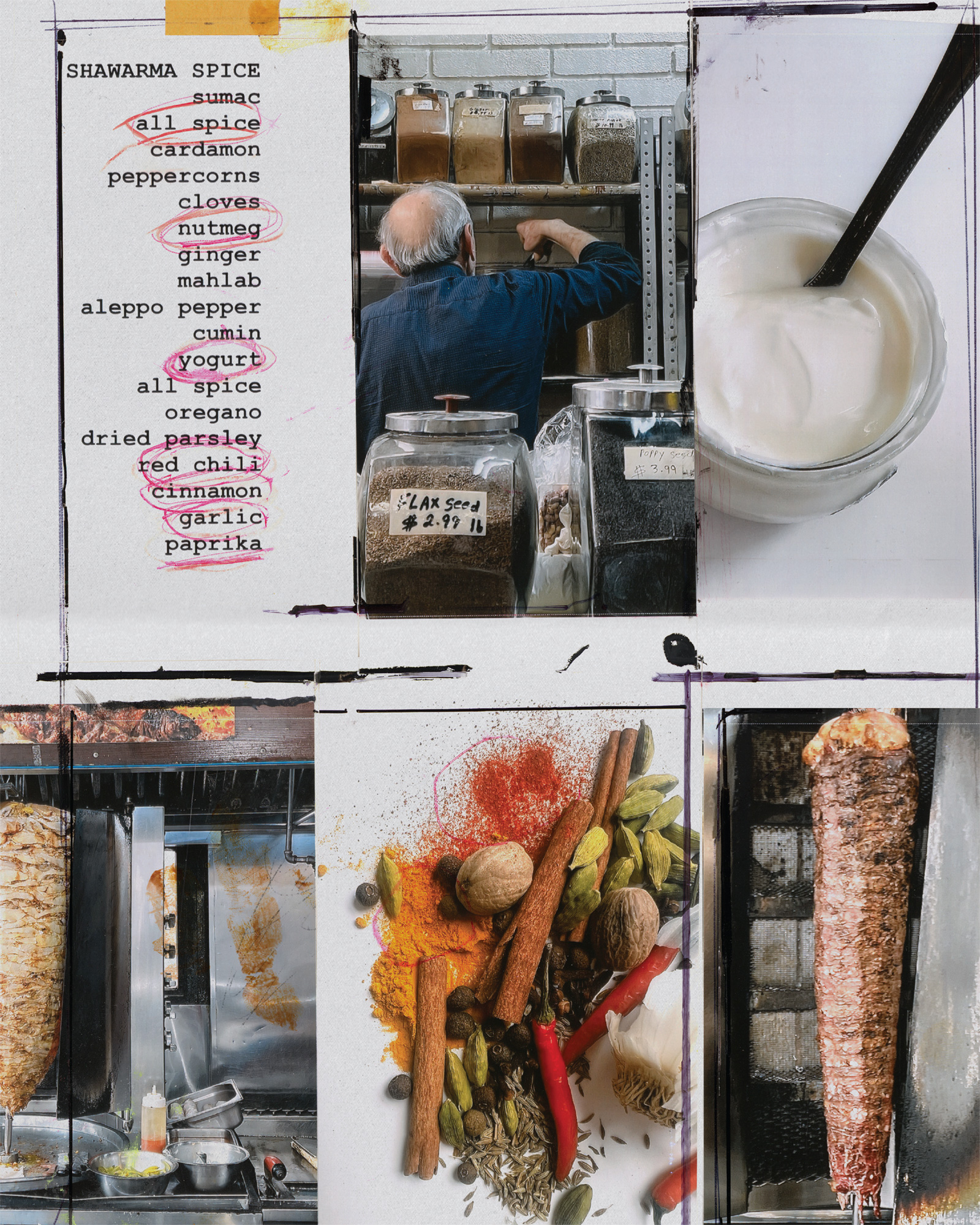
Shawarma arrived in the United States a little later, in the mid-20th century, following waves of immigration from the Middle East. A significant number of immigrants arrived after the passage of the 1965 Immigration and Nationality Act, and Lebanese and other Arab communities formed in cities like Detroit, New York, and Los Angeles. Originally, shawarma’s flavor profile in the U.S. leaned heavily on warm, aromatic spices—cinnamon, clove, allspice, cardamom, and nutmeg—blended with garlic, vinegar, and sometimes yogurt to create a deeply spiced, slightly sweet, tangy marinade.
But as it adapted to American palates and pantry staples, the spice mix shifted. Many U.S. versions today feature turmeric, cumin, and paprika, which are earthy and vibrant, but they are often missing the layered sweetness and warmth of the shawarma I grew up eating.
Today, shawarma isn’t just found in corner shops; it’s made its way into fine dining restaurants around the country. Chefs are reinventing it with slow-roasted duck, lamb neck, and composed plates that showcase its versatility and rich cultural lineage. These elevated interpretations honor its origins while embracing the creativity of contemporary cuisine.
Rethinking Authenticity
That day in my kitchen in Cleveland, I was chasing what I believed was the authentic shawarma flavor. In fact, I started my company, Beituti, with a clear mission: to bring authentic Levantine flavors to American grocery shelves in modern and accessible formats. For months, “authentic” was a word I chased through measured spices and rigorous testing, as I attempted to re-create that familiar taste from Beirut.
I believed that preserving a specific “authentic” recipe was the best way to honor my heritage, and I initially resisted the sweeter U.S. version. Instead, I clung to mine as the “true” taste of Lebanon. But after learning more about the history of shawarma, I began to wonder: “authentic” and “true” to whom? I realized that its transformation in different settings and times mirrors a broader evolution and that every version tells its own story. To claim there’s only one true shawarma spice mix is to miss the very essence of spices. Spices are travelers by nature. They cross oceans and empires, pick up new companions along the way, and settle into unfamiliar kitchens. Trying to own a spice blend is like trying to capture the wind.
I’ve come to understand that authenticity is less about rigid adherence to an original formula and more about the feeling a dish evokes: the warmth of a well-loved meal, the comfort of a familiar taste, and the shared stories that come with every bite. Rather than chasing a fixed idea of what shawarma should be, I now focus on sharing my own culinary journey, which honors both tradition and transformation. My family’s recipe isn’t the definitive benchmark of authenticity; it’s simply one interpretation among many, inspired by the flavors of our favorite shawarma stand in Beirut and passed down through generations.
This understanding changed my mission at Beituti. After countless rounds of testing, I ended up with a marinade that takes me back to where I began: with the recipes I grew up on. I did give them subtle updates: naming our chicken marinade Garlic Shawarma and our beef version Zesty Shawarma, adding a splash of gluten-free tamari to the latter for extra depth, and steering clear of seed oils to keep the ingredients clean and simple. The renaming reflects how I see them: While they are rooted in my personal experience, these marinades are meant to live on in other people’s kitchens. It isn’t about dictating how they must be used; it’s an invitation for others to make them their own, in the same way that past generations adapted these flavors based on their environments. Whether someone uses the sauces to marinate chicken or tofu, or to grill or roast, if it reminds someone of home or offers a novel taste, then it belongs to them just as much as it belongs to me.
Up Next
Et cetera